
Point cloud formats explained: E57, RCP/RCS, LAS — which one should you request?
Your scan deliverable is only as useful as the format it arrives in. A practical guide to the three formats that matter, what each is for, and the one line to put in your RFP.
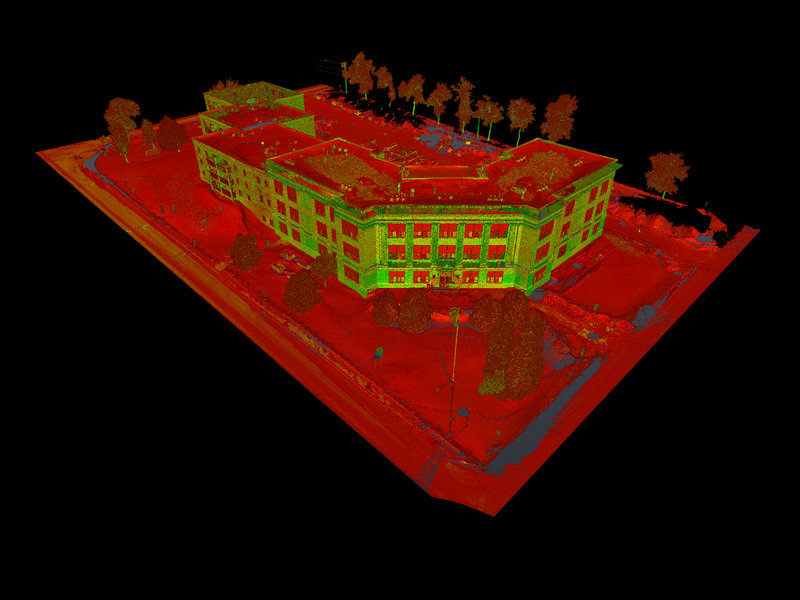
You paid for a survey-grade point cloud. Then it arrives in a format your software cannot open, or as a proprietary blob you cannot archive. Format choice sounds boring — until it costs you the reuse of your own data. Here are the three formats that matter and what each is actually for.
E57 — the archive and exchange standard
An open, vendor-neutral format (ASTM E2807) that stores points, colors, intensity and the scan positions. If you keep one format forever, keep this one: every serious tool imports it, and no vendor can hold it hostage. Think of E57 as the PDF of point clouds.
RCP/RCS — the Autodesk working format
Autodesk's indexed format for ReCap: RCS files hold the points, the RCP project references them. If your team models in Revit — as most Scan to BIM work is delivered — this is the format the model links to: fast to navigate, cropped by view, streamed instead of loaded whole.
LAS/LAZ — the geospatial native
Born in aerial LiDAR, with per-point classification and georeferencing conventions. Ask for it when your project mixes terrestrial scans with drone or mobile mapping data, or when the cloud goes into GIS. LAZ is its compressed twin.
What about the "raw" scanner files?
Native formats (like Leica's) preserve everything but tie you to one vendor's software. Fine as a backup; never as the only deliverable.
The one line for your RFP
"Point cloud delivered as E57 (archive) + RCP/RCS (linked to the Revit model), georeferenced to project control; LAS on request for GIS integration." That sentence keeps your data usable in every tool you own today — and the ones you will own in ten years.
The quiet trap: density and size
Format is half the story; density is the other half. A full-resolution cloud of a large facility can reach hundreds of gigabytes. Good vendors deliver a working density that serves modeling and a full-density archive — and document both. Our accuracy explainer covers the QA that should accompany them.
Every Bimbranch delivery includes E57 + RCP by default, with the registration report attached. Ask for a sample dataset if you want to test the pipeline against your own software first.
Ready to scan your project?
Send us your site and scope — we reply with a technical quote within one business day.
Get a free Quote